
Analog Watch vs Digital Watch: Which Is Right for You?
Hands or numbers? How the two displays differ, where digital came from and who should choose which.
Key takeaways
- An analog watch shows time with hands on a dial; a digital watch shows numbers on a screen.
- Hamilton revealed the Pulsar, the first electronic digital wristwatch, in 1970 and began selling it in 1972.
- Early LED watches lit up only at the press of a button, while LCD screens can show the time all the time.
- Ana-digi watches such as many Casio G-Shock models combine hands and a digital screen.
- Choose analog for dress and quick glances at elapsed time; choose digital for timers, alarms and sport.
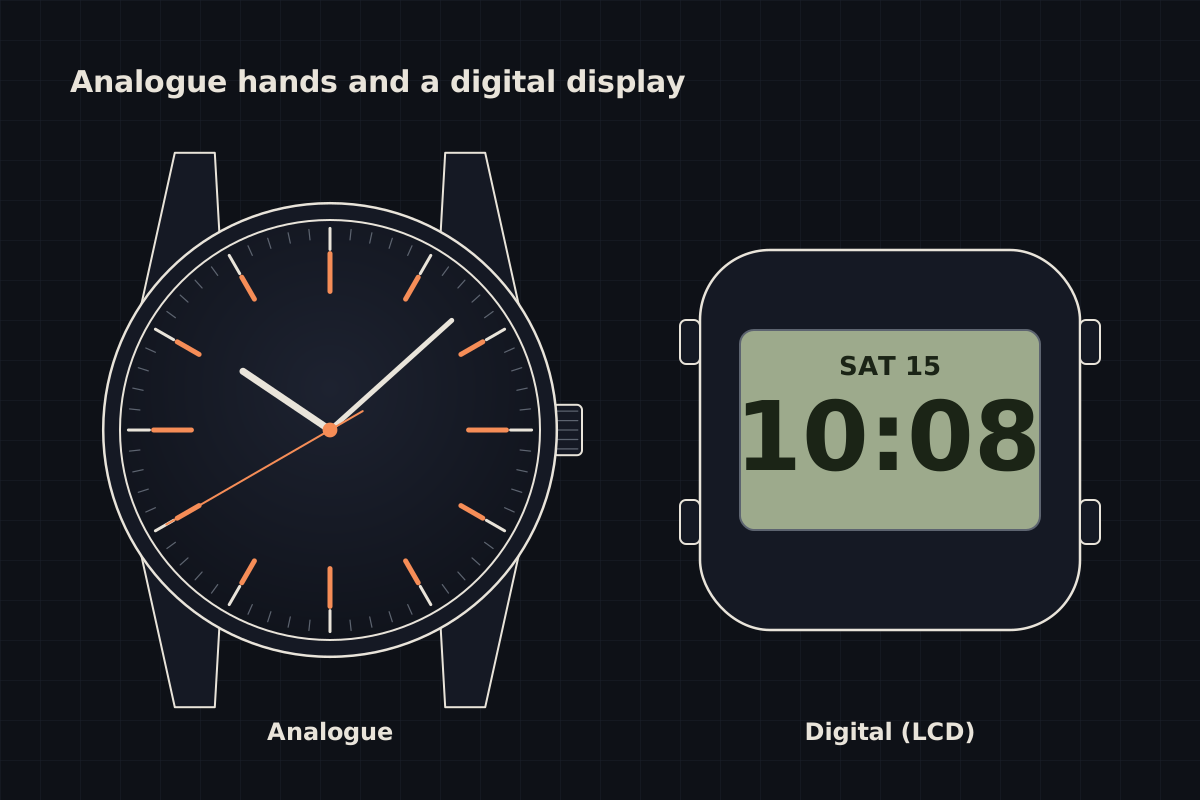
An analog watch tells the time with hands that sweep around a dial, while a digital watch spells it out in numbers on a screen. Both do the same basic job. However, they feel very different to read, wear and live with. This guide explains how each display works, where digital watches came from and which style suits your day, so you can choose with confidence.
What is an analog watch?
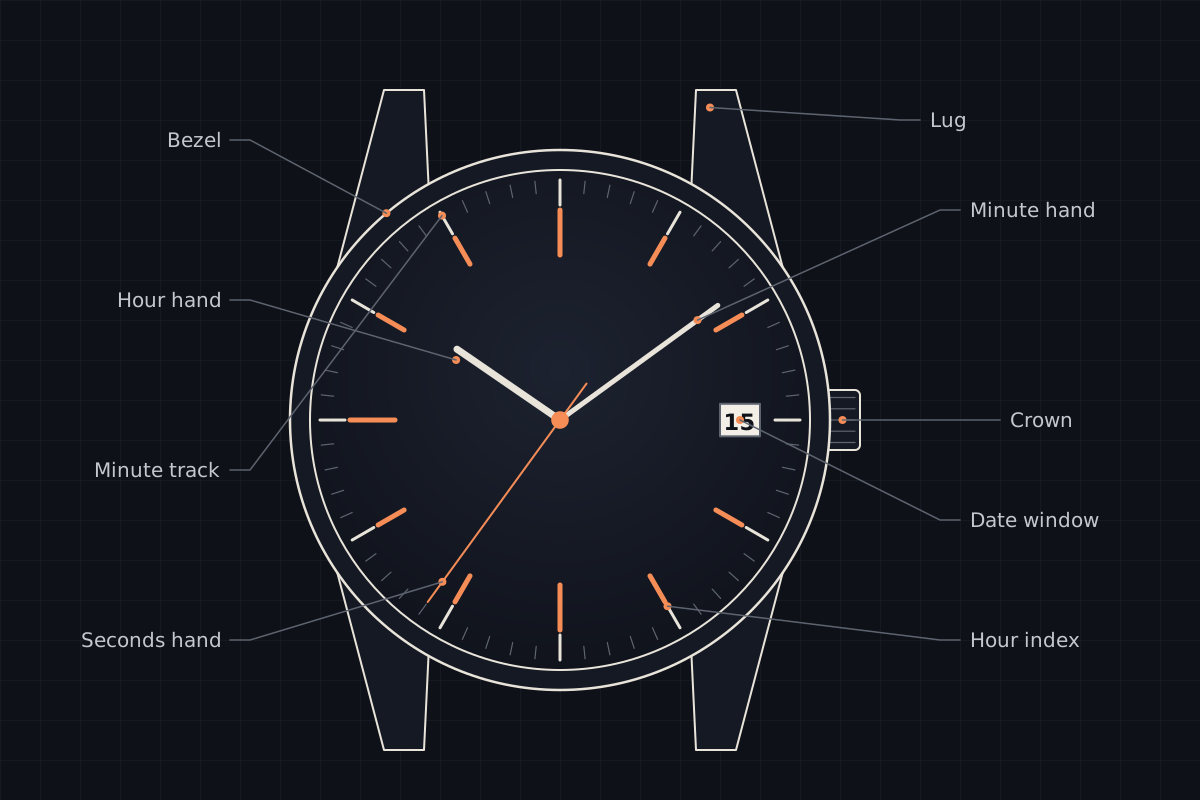
First, the word "analog" means the display moves continuously, like a clock tower. An analog watch has an hour hand, a minute hand and often a seconds hand over a dial with twelve hour markers. Inside, the movement can be a battery-powered quartz watch movement, a hand-wound mechanical one or a self-winding automatic watch movement. In other words, the display and the engine are separate choices. Most dress watches, dive watches and luxury pieces use this layout.
What is a digital watch?
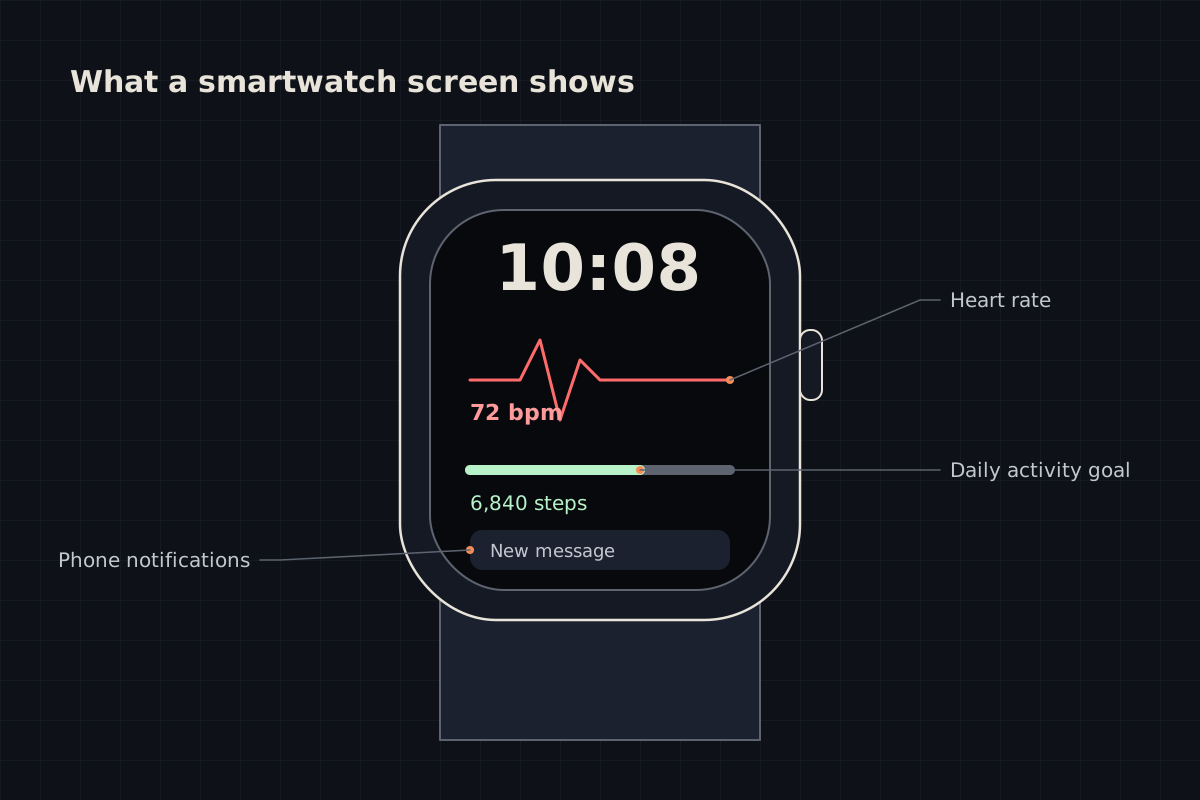
A digital watch shows the time as numbers, for example 14:35. Almost every modern digital watch uses quartz timekeeping and a liquid crystal display (LCD). Because the screen is electronic, adding features costs very little. As a result, even a low-priced digital model often includes a stopwatch, a countdown timer, several alarms, a backlight and a calendar. A smart watch takes this idea further, with a full touch screen, apps and phone notifications.
Analog watch vs digital watch: readability
Readability depends on what you want to know. Digital numbers give the exact minute instantly, so they help when you need precise times, such as for a train, a medication schedule or a race split. On the other hand, an analog watch shows time as a shape. You can see at a glance that it is "almost quarter past", or how much of the hour is left, without reading any numbers.
That visual sense of time also explains why pilots, divers and racing drivers have long used analog dials. For instance, a rotating bezel or a chronograph watch sub-dial shows elapsed time as a slice of the circle. Meanwhile, digital screens can be harder to read in bright sun at an angle, although modern LCDs and backlights have improved a great deal. In practice, both work well once you are used to them.
A short history of the digital watch
For centuries, every watch was analog. Then, in May 1970, Hamilton revealed the Pulsar, which Guinness World Records lists as the first electronic digital watch. It went on sale in spring 1972, and the first model cost US$2,100, far more than many fine mechanical watches. Soon after, cheap electronics brought digital watches to the mass market, and they became a symbol of the 1970s. You can follow the wider story in our history of watches.
LED vs LCD displays
The first Pulsar used red LED (light-emitting diode) digits. These glowed brightly, but they used so much power that the display stayed dark until you pressed a button. Then, in October 1973, Seiko launched the 06LC, which Epson's history pages describe as the first digital quartz watch with a six-digit LCD. An LCD does not make its own light. Instead, it reflects room light, so it can show the time all day on a tiny battery. Because of this, LCD soon replaced LED in most digital watches.
Ana-digi: the analog watch with a digital screen
If you cannot decide, an ana-digi watch gives you both. It places analog hands over a dial that also holds one or more small LCD windows. The hands handle quick time reading, while the screen adds a stopwatch, alarms, world time or a second time zone. Casio's G-Shock range is the best-known example, with many tough ana-digi models alongside its fully digital ones. Similarly, several pilot and outdoor watches use this layout for extra functions.
Analog watch pros and cons compared with digital
Neither style wins outright. Instead, each one suits different needs, budgets and occasions. For example, a commuter who wants alarms may lean digital, while someone who dresses up often may lean analog. The table below sets out the main trade-offs, so you can weigh them against your own routine.
| Factor | Analog | Digital |
|---|---|---|
| Reading the time | Fast glance, good sense of elapsed time | Exact minute, no interpretation needed |
| Extra functions | Date, chronograph or GMT add cost | Alarms, timers and backlight come cheaply |
| Movement choice | Quartz, mechanical or automatic | Quartz electronics only |
| Formal wear | Suits suits and evening dress | Mostly casual and sporty |
| Long-term value | Fine mechanical models can hold value | Usually treated as a tool |
Of course, an analog watch also needs a little more care if it is mechanical, because it will need a service every few years. By contrast, a digital quartz watch usually needs nothing more than a new battery. So think about how much attention you want to give your watch before you decide.
Who should choose an analog watch?
Choose an analog watch if you want one piece for the office, weddings and dinners. It also suits you if you enjoy the craft of mechanical movements, or if you like reading time as a shape. In addition, an analog design gives far more choice of style, from slim dress watches to chunky divers. Many collectors start with one good analog watch and build from there, because it pairs easily with most outfits.
On the other hand, choose a digital watch if you run, cycle, train in the gym or need alarms and timers. It is also a sensible pick for children learning to read the time, students on a budget and anyone who wants a light, tough watch for rough work. In short, choose analog for style and versatility, and digital for function and value.
Where smart watches fit
Today, the smart watch has become the most popular kind of digital watch. It adds fitness tracking, messages and payments, although it needs charging every few days or weeks. Even so, many people still wear an analog watch for occasions and a smart or digital one for sport. Hamilton itself brought the Pulsar look back in 2020 with a modern digital model, which shows that both styles still have fans. Finally, there is no wrong answer, so choose the display that fits the way you live.
Frequently asked questions
What is the difference between an analog watch and a digital watch?
An analog watch shows the time with moving hands over a dial marked with hours and minutes. A digital watch shows the time as numbers on a screen, usually an LCD. Both can run on quartz, and many analog models also use mechanical or automatic movements, which digital watches cannot use.
What was the first digital watch?
The Hamilton Pulsar is widely recognised as the first electronic digital wristwatch. Hamilton revealed it in May 1970 and put it on sale in spring 1972 for US$2,100. It used a red LED display that lit up only when you pressed a button, which saved battery power.
Is an analog watch more formal than a digital watch?
Usually, yes. A slim analog watch on a leather strap or a neat bracelet suits suits, weddings and business meetings better than most digital watches. However, style rules have relaxed, and some people happily wear a smart or digital watch every day. Dress codes and personal taste should guide you.
What is an ana-digi watch?
An ana-digi watch combines analog hands with a small digital screen on the same dial. The hands give quick, classic time reading, while the screen adds features such as a stopwatch, alarms, world time or a second time zone. Many Casio G-Shock models use this layout.
Are digital watches more accurate than analog watches?
Not because of the display. Accuracy depends on the movement inside. A quartz analog watch and a quartz digital watch keep similar time, often within about 15 seconds a month. A mechanical analog watch is less accurate, typically drifting several seconds a day, but many people value its craft.
Sources
- Wikipedia: Pulsar (watch)
- Guinness World Records: First electronic digital watch
- Epson: Seiko Quartz LC V.F.A. 06LC (1973), first six-digit LCD watch
- Federation of the Swiss Watch Industry: Hamilton brings its Pulsar model back to life
- Casio Malaysia: G-SHOCK collection
- Bulova: Watch movement types explained
Prices, specifications and availability change. Check the brand's official Malaysian site or an authorised retailer before you buy.