
Watch Strap Guide: Types, How to Change Them and Care
The right strap changes how a watch looks, feels and lasts, and swapping one is easier than most people think.
Key takeaways
- Match the strap width to the lug width exactly, for example 20 mm lugs need a 20 mm strap.
- Leather looks smart but dislikes sweat and water; rubber, FKM and steel cope far better with Malaysian humidity.
- A spring-bar tool or quick-release bars let you change a strap at home in a few minutes.
- To shorten a bracelet, push the pins out in the direction of the arrows on the inside of the links.
- For expensive or vintage pieces, let a jeweller or service centre do the work.
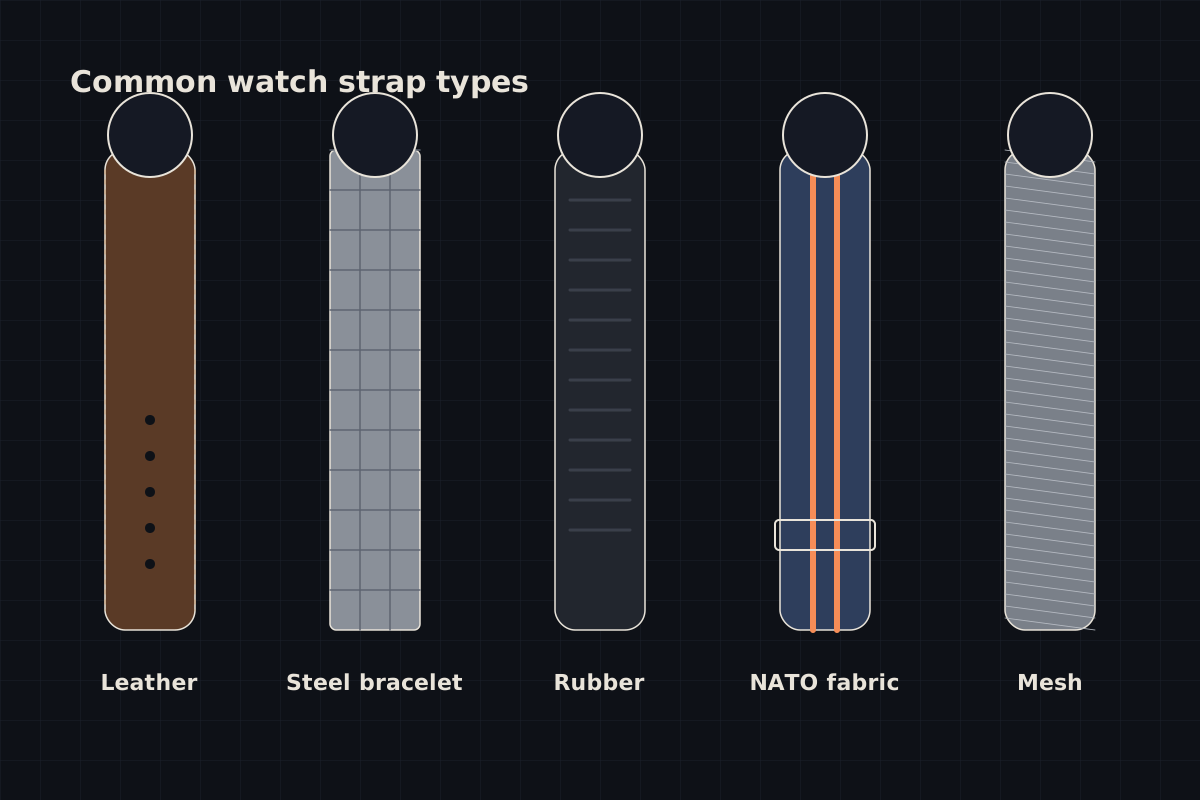
A watch strap does more than hold the case on your wrist. It changes the style, the comfort and even how large the watch looks. Swap a steel bracelet for a slim leather band, and a sports watch suddenly looks ready for the office. This guide covers the main strap types, how to measure for one and how to change it safely. It also explains how to keep straps fresh in Malaysian heat.
Watch strap types compared
Most straps fall into six families. Each watch strap type suits a different mood and climate, so many owners keep two or three for one watch. Here is a quick look at the strengths and weak points of each.
Leather
A leather watch strap is the classic choice for dress and office wear. It feels warm, softens with time and pairs well with a suit. However, it absorbs sweat and water, so it ages faster in a humid climate. Calfskin is the common option, while exotic leathers cost more and need extra care.
Steel bracelet
A steel bracelet is tough, easy to clean and works with almost anything. It also adds weight and a sportier look. Because it is made of links, you size it by removing or adding links rather than using holes. Many bracelets also offer a few millimetres of fine adjustment at the clasp.
Rubber and FKM
Rubber straps shrug off sweat, rain and pool water. FKM is a dense synthetic fluoro-rubber, often fitted as the stock watch strap on sports models. As a result, it is a popular pick for a diving watch. It also suits gym sessions and weekend trips to the beach.
NATO and fabric
A NATO is a single nylon strip that threads under the case through both spring bars. So if one bar fails, the watch still stays on your wrist. Other fabric straps, such as canvas or woven nylon, attach like a normal two-piece strap. They are light, cheap and quick to dry after a rinse.
Mesh
Mesh, or Milanese, straps are made from fine woven steel. They look neat and breathe better than solid links. In addition, many have a sliding clasp, so you can adjust the length without tools. That makes them a handy middle ground between leather and a bracelet.
How to choose a watch strap size
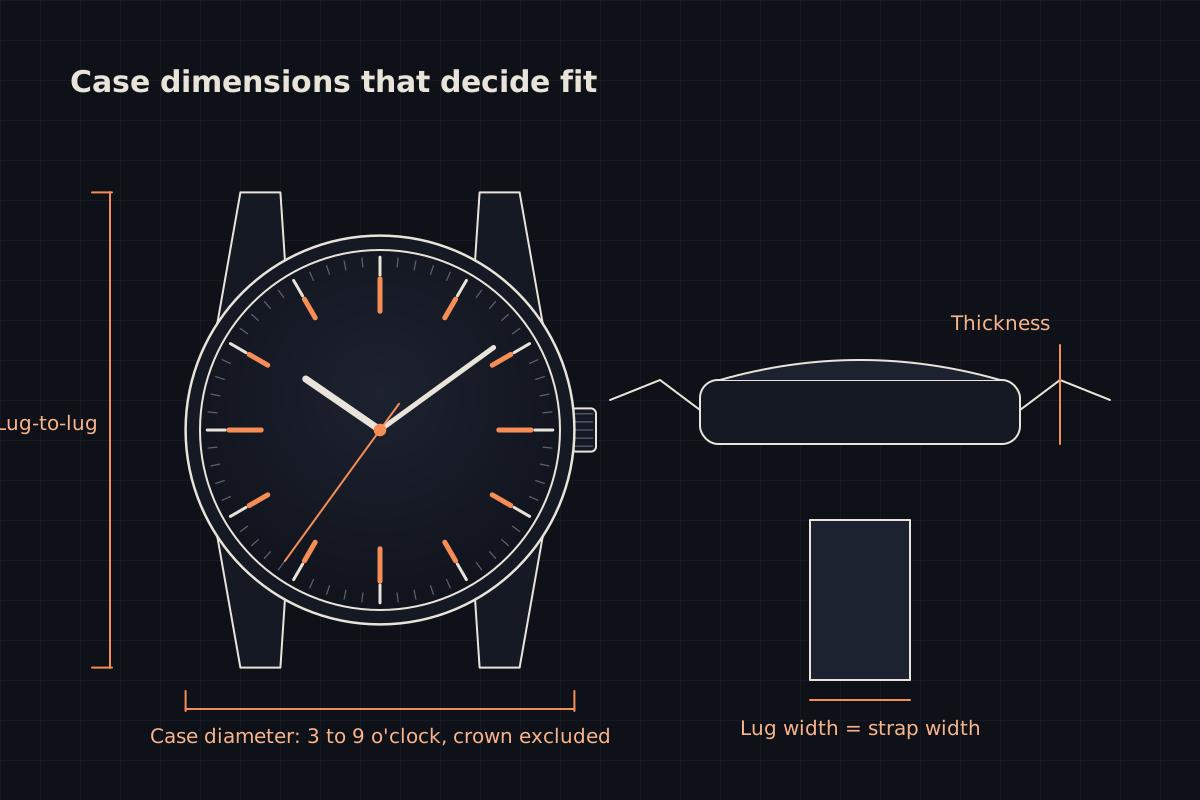
Start with lug width, which is the gap between the lugs where the strap attaches. Common widths are 18, 20 and 22 mm, and the strap must match exactly. Too narrow, and it slides sideways. Too wide, and it will not fit at all. Often, the old strap has the width stamped on its underside, so check there first.
Length matters too. Measure your wrist, then compare it with the strap's listed fit range. Also, keep in mind that a wide strap makes a watch look bigger, while a tapered strap slims it down. Our watch size guide explains how lug width works alongside lug-to-lug and case diameter.
How to change a watch strap with a spring-bar tool
Most straps attach with spring bars. These are small sprung rods whose tips sit in holes on the inside of the lugs. A spring-bar tool has a fork on one end and a pin on the other. According to WatchGecko, the job takes only a few minutes once you know the steps.
- First, place the watch face down on a soft cloth or towel.
- Next, slide the forked tip between the strap and the lug until it catches the spring bar's shoulder.
- Then press the bar inwards, towards the centre of the strap, and tilt the strap out of the lug.
- After that, fit the spring bar into the new strap and seat one tip in its lug hole.
- Compress the other tip with the tool, line it up with its hole and let it click into place.
- Finally, tug the strap gently to check that both bars are secure.
Quick-release spring bars
Many new straps come with quick-release spring bars. These have a small lever on the underside, so you can pull the bar back with a fingernail. In practice, no tool is needed, and a swap takes seconds. Timex describes the same simple method. Still, check the bar has clicked fully into each lug hole before you wear the watch.
How to adjust a metal watch strap
A steel bracelet is sized with links, not holes. Most removable links have small arrows on the inside. The arrows show which way to push the pin out. Orient and other makers give the same advice: push the pin in the direction of the arrow, never against it.
- First, count how many links you need to remove, and take them evenly from both sides of the clasp.
- Next, rest the bracelet in a holder or on a folded cloth with the arrow pointing down.
- Then push the pin out with a pin pusher in the arrow's direction.
- Rejoin the bracelet, and press the pin back in against the arrow until it sits flush.
- Finally, use the micro-adjust holes at the clasp to fine-tune the fit.
Pin links and screw links
Not every bracelet uses friction pins. Some use screw links, where a tiny screw holds each link together. In that case, you need a precision screwdriver that fits the slot exactly, because a loose fit chews the screw head. Others use split pins or pins with small collars, which are easy to lose. So work over a tray and keep every part.
Watch strap care in Malaysian heat and humidity
Malaysia's heat and humidity are hard on straps, especially leather. Sweat contains salt and oils, so it soaks into leather and slowly breaks it down. As a result, leather can darken, smell and crack sooner than in a cooler climate. Here are simple habits that help any watch strap last longer.
- Wipe the inside of a leather strap with a dry cloth after a long, warm day.
- Let it air-dry overnight in a shaded spot, away from direct sun and aircon vents.
- Keep leather out of the pool and the shower, even if the case is water resistant.
- Rinse rubber, NATO and steel with fresh water after the beach or the gym.
- Clean steel bracelets now and then with a soft toothbrush and mild soapy water.
Rotating straps also helps. For example, wear leather to the office and switch to rubber for the weekend. Orient's strap care guide makes a similar point: give leather time to dry between wears. In short, a little care stops a good watch strap from wearing out in a single year.
When to let a jeweller change your watch strap
Changing a strap at home is usually safe on an everyday watch. However, a slipped tool can scratch polished lugs in a second. For an expensive, vintage or sentimental watch, it is wiser to let a jeweller or service centre do it. The same goes for bracelets with screw links or unusual pins. If you are new to the terms used here, our watch glossary explains them in plain English.
Matching a watch strap to your style
Finally, think about where you will wear the watch. A black or brown leather band suits formal events, while a steel bracelet works from desk to dinner. Rubber and NATO straps feel right for sport and travel. For more ideas on pairing, see our guide to how to wear a watch. Above all, choose a watch strap that feels comfortable, because you will wear it more often.
Frequently asked questions
How do I know what size watch strap to buy?
Check the lug width, which is the gap between the lugs where the strap attaches. It is often printed on the old strap or listed in the specifications, for example 18, 20 or 22 mm. Then buy a strap of exactly that width and a length that suits your wrist circumference.
How to change watch strap at home?
Lay the watch face down on a soft cloth. Slide the forked end of a spring-bar tool between the strap and the lug, press the bar inwards and ease the strap out. To fit the new strap, seat one end of the bar, compress the other end and let it click into the lug hole.
How to adjust watch strap metal links?
Look for small arrows on the inside of the bracelet links. Push each pin out in the direction of the arrow with a pin pusher, remove the same number of links from each side of the clasp, then reconnect the bracelet and push the pin back in the opposite direction until it sits flush.
Which watch strap is best for hot, humid weather?
Rubber, FKM rubber, steel bracelets and NATO fabric straps cope best with heat and sweat, because you can rinse and dry them. Leather looks smart but absorbs moisture, so it can darken, smell and crack sooner. Many people keep leather for the office and switch to rubber at weekends.
Should I change the strap on an expensive watch myself?
You can, but the risk of scratching polished lugs is real. A slipped tool can mark the case in a second. For expensive, vintage or sentimental pieces, it is safer to let a jeweller or an official service centre swap the strap or size the bracelet for you.
Sources
- Timex: How to change the strap on a watch
- WatchGecko: How to change a watch strap
- Orient: How to adjust the common watch bracelet
- Watch.co.uk: How to adjust a watch band
- Orient: How to care for your watch strap
- Gear Patrol: How to adjust a metal watch bracelet
Prices, specifications and availability change. Check the brand's official Malaysian site or an authorised retailer before you buy.