
How to Wear a Watch: Which Hand, Fit and Style Tips
A few simple habits decide whether a watch looks right and feels comfortable all day.
Key takeaways
- Convention puts the watch on your non-dominant wrist, partly because the crown usually sits on the right of the case.
- Wear it just above the wrist bone, not on top of it.
- Aim for a fit that lets one finger slide under the strap.
- Match formality: a slim watch on leather for formal wear, a sports watch for casual days.
- Keep metals in the same family as your other jewellery for a tidy look.
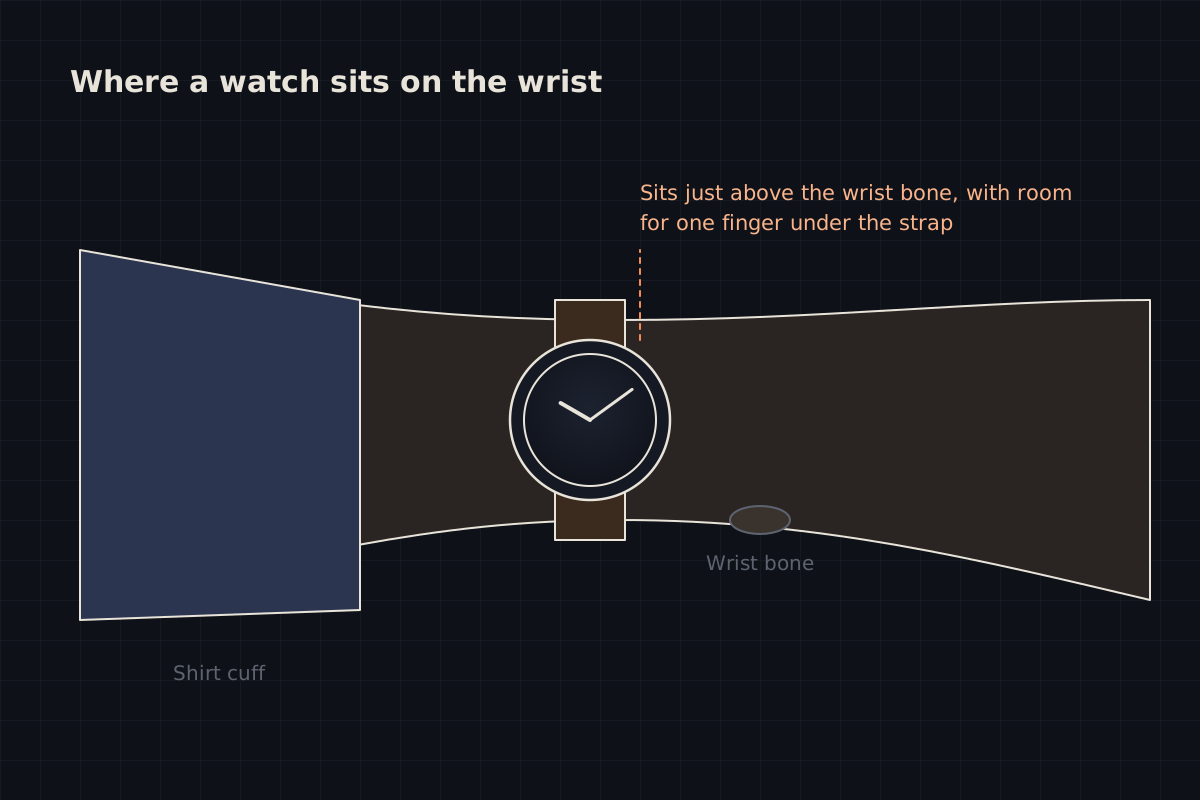
Knowing how to wear a watch comes down to four things: the wrist, the position, the fit and the occasion. None of them is a strict rule, but together they make a watch look right and feel comfortable. This guide walks you through each one in plain terms. It also covers sleeves, jewellery and the difference between office and weekend wear.
Which hand should you wear a watch on?
By convention, most people wear a watch on their non-dominant hand. So if you are right-handed, the left wrist is the usual choice. Timex gives two practical reasons. First, the watch stays out of the way when you write or use tools, so it takes fewer knocks. Second, you can check the time while your main hand is busy.
There is also the crown. On most watches it sits on the right side of the case. As a result, a right-hander can wind or set it easily while wearing the watch on the left. Left-handers often choose the right wrist instead, and a few brands offer left-handed models with the crown on the left. Longines makes the same point: comfort matters more than tradition.
Where it should sit on your wrist
Most advice on how to wear a watch agrees on one spot: just above the wrist bone, on the arm side. In that position the case does not press into your hand when you bend it. It also lets a shirt cuff slide over the watch. If the watch sits on top of the bone, it can rub and feel bulky. Meanwhile, if it sits too far up the arm, it slides about and looks lost.
This is also the place to measure your wrist before you buy. Our watch size guide explains how to take that number and match it to a case size. In short, the right size and the right position work together.
How tight to wear a watch
For how to wear a watch comfortably, one simple test helps most. Once the strap is closed, you should be able to slide one finger between the strap and your wrist. The watch can move a little, but it should not spin round or slip over your hand. If it leaves deep marks, loosen it a notch. On the other hand, if it slides down to your knuckles, tighten it.
Malaysian heat makes this matter more. After a warm day outdoors, a bracelet that felt snug in the morning may start to pinch. Many steel bracelets have micro-adjust holes in the clasp for exactly this. Our watch strap guide shows how to use them, along with how to change straps safely.
How to wear a watch for the occasion
Learning how to wear a watch well also means matching it to the event. A slim dress watch on a leather strap suits formal dinners, weddings and business meetings. Its thin case slips under a cuff, and its simple dial does not compete with your outfit. By contrast, a chunky sports or dive watch looks at home with polo shirts, jeans and weekend trips.
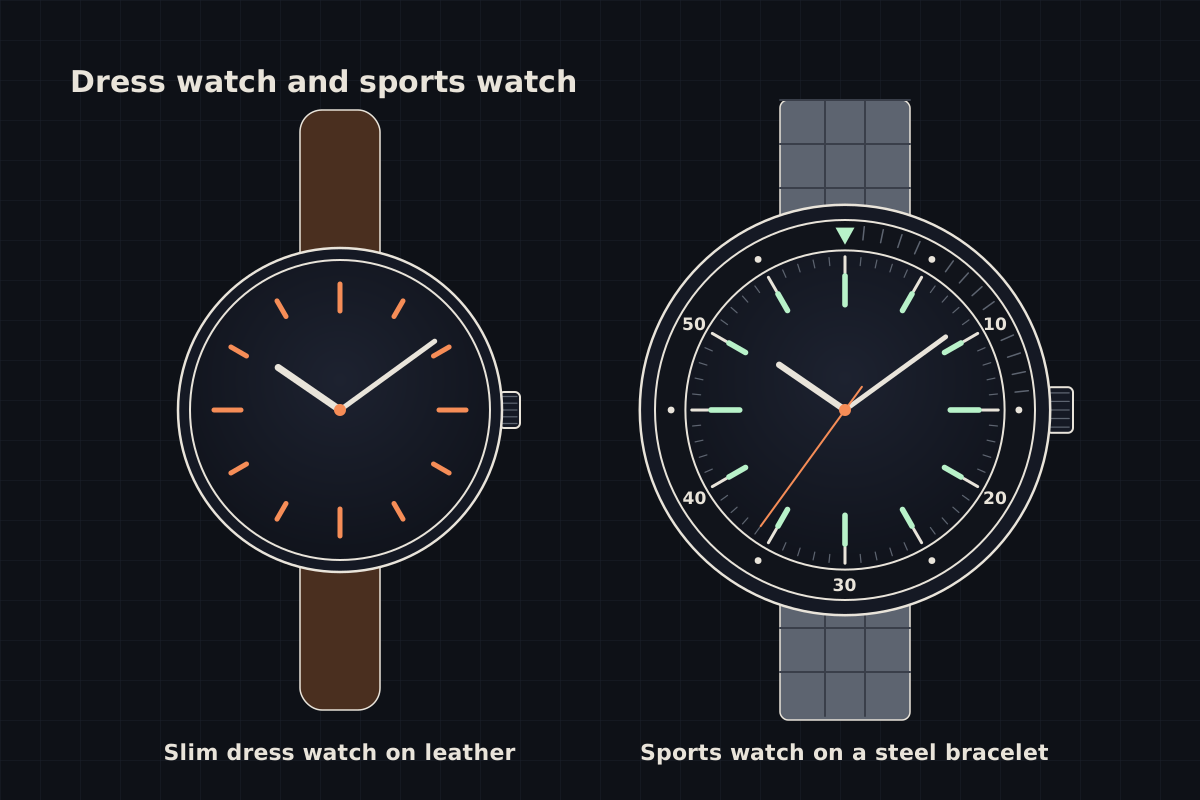
Office vs casual
For most offices, a mid-sized watch on steel or leather works well. It looks tidy with a shirt and still copes with daily life. Then, at the weekend, you can switch to rubber, a NATO strap or a bolder case. If you own just one watch, a simple steel model with a plain dial covers both settings. Browse our picks of watches for men and watches for women for ideas across both.
How to wear a watch with long sleeves and a cuff
Long sleeves are common in Malaysian offices and at formal events. Whether you wear a shirt with a buttoned cuff or a baju Melayu, the aim is the same. The watch should sit neatly at the edge of the sleeve, not trap the fabric. So a thinner case usually works best, because it slides under the cuff without a bulge. If your watch is thick, wear it a little lower on the wrist so the cuff rests just above it.
Also, think about the occasion and its customs. At a wedding, a prayer gathering or a festive open house, a quiet, simple watch is a respectful choice. In fact, a plain dial and a dark strap rarely look out of place.
How to wear a watch with jewellery
Jewellery is the last part of how to wear a watch with confidence. When you wear other pieces, try to keep metals in the same family. For example, a steel or white gold watch pairs well with silver-toned rings and bracelets. Similarly, a yellow gold watch suits gold tones. Two-tone watches bridge both, which makes them easy to style. That said, this is a guide rather than a rule, so trust your eye.
Stacking a bracelet next to your watch is also popular. However, hard metal beads can scratch a polished case. So wear the bracelet on the other wrist, or choose a soft fabric or leather band to sit beside the watch.
Common mistakes when you wear a watch
- Wearing it so loose that it slides over the hand.
- Fastening it so tight that it leaves deep marks.
- Pairing a huge sports watch with a slim formal suit.
- Letting a leather strap soak in sweat, then leaving it to dry in the sun.
- Forgetting to set the date after a short month.
Beyond the wristwatch
Of course, not every timepiece goes on the wrist. A pocket watch on a chain still suits a waistcoat or a formal costume. Overall, though, the principles of how to wear a watch stay the same: comfort first, then proportion, then style. Once those three feel right, the watch will simply feel like part of you.
Frequently asked questions
Which hand to wear watch on?
Most people wear a watch on their non-dominant hand, so right-handers usually choose the left wrist. This keeps the watch out of the way when you write and reduces knocks. Also, the crown usually sits on the right of the case, which is easy to reach with your right hand. Still, either wrist is fine.
How tight should a watch be on your wrist?
A good rule is that one finger should slide between the strap and your wrist. The watch should move slightly but not spin round or slide over your hand. If it leaves deep marks, loosen it a notch. If it slips down your hand, tighten it a little.
Where should a watch sit on your wrist?
A watch usually sits just above the wrist bone, on the arm side. In that spot it does not dig in when you bend your hand, and a shirt cuff can cover it. Some people wear it a little higher during exercise so that it stays put.
Can you wear a sports watch with a suit?
You can, but a slim dress watch on a leather strap usually looks neater with formal clothes because it slides under the cuff. A thinner sports watch on a steel bracelet works for many offices. For very formal events, a simple dial and a thin case are the safer choice.
Should my watch match my jewellery?
It helps to keep metals in the same family. Pair a steel or white gold watch with silver tones, and a yellow gold watch with gold tones. Two-tone watches bridge both. This is a guideline rather than a rule, so wear what you feel comfortable with.
Sources
- Timex: Which wrist should you wear a watch on?
- Longines: What wrist should you wear your watch on?
- Timex: How to wear a watch, learning the basics
- Bob's Watches: How to wear a Rolex
- Jamais Vulgaire: What size watch according to your wrist
Prices, specifications and availability change. Check the brand's official Malaysian site or an authorised retailer before you buy.